Simple Buttonhole Applique
A Clean, Quiet Detail That Earns Its Place
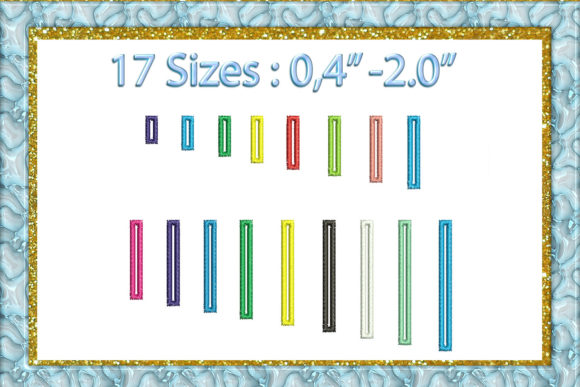
First impression? Simple Buttonhole Applique doesn’t shout — it settles in. It’s a calm, rectangular shape with clean edges and subtle dimension, not flashy or fussy. There’s no florid scrollwork, no dense fill, no layered motifs. Just the quiet confidence of a well-proportioned buttonhole outline, stitched with thoughtful satin stitch definition and just enough interior structure to read clearly at 2–3 inches wide. It feels like a design made for intention, not ornamentation: the kind you choose when you want texture, tactility, and understated craft to speak louder than embellishment.
Where It Lives Best: Real Projects, Not Just Pixels
I tested Simple Buttonhole Applique on a natural linen tea towel destined for a local boutique’s holiday collection — one where every stitch needs to feel considered, not crowded. It landed perfectly along the lower corner, paired with a single monogrammed initial in matching thread. The result wasn’t “cute” — it was resolved. Customers paused. They ran fingers over the smooth satin edge. One even asked, “Is that hand-stitched?” (It wasn’t — but that’s the mark of a well-executed machine embroidery design.)
This is where Simple Buttonhole Applique shines: as a grounding element. On a heavyweight cotton tote bag? Yes — it anchors the design without competing. On a baby onesie’s chest panel? Absolutely — soft, safe, and visually soothing. As an embroidered patch sewn onto a denim apron? Ideal — its rectangular frame holds up beautifully under wear and washing. Even on a relaxed-fit sweatshirt cuff or a minimalist pillow cover, it reads as intentional detail, not afterthought.
Where to Pause — and Why
That same quiet strength becomes a limitation in certain contexts. On thin or highly stretchy knit fabric — think lightweight t-shirts or ribbed baby bodysuits — Simple Buttonhole Applique demands extra attention. Without proper stabilizer and a sharp needle, the satin stitch can pucker or tunnel, especially along the longer edges. The design doesn’t include heavy underlay or dense fill stitches to compensate, so it relies on your setup, not built-in forgiveness.
It also doesn’t scale down gracefully below ~1.5 inches. The corners tighten, the satin width narrows, and the visual clarity blurs — especially on dark fabric where thread contrast drops. I tried it on a curved cap front using a small hoop: the rectangle resisted conforming, and the top edge lifted slightly. For caps or other curved surfaces, consider it only with precise hooping, tear-away stabilizer, and a test run first.
And while it’s elegant on light-to-mid-tone fabrics, avoid pairing it with ultra-fine-gauge knits or loosely woven gauze unless you’re confident in your stabilizer stack. The description rightly flags this — “fine-gauge and knit fabr” — and it’s not just boilerplate. This is an applique design that asks for partnership, not autopilot.
What It Adds — Beyond Stitch Count
Simple Buttonhole Applique quietly lifts the perceived value of any finished product. It signals care: the kind that makes a personalized gift feel heirloom-adjacent, or a small shop product feel curated rather than mass-produced. On Etsy listings, it performs well in printable mockups — its clean lines translate crisply in both black-and-white and color previews, helping buyers visualize it instantly on their own products.
For craft business owners, it’s versatile design assets without complexity. You can use it as-is, pair it with a single font-based name, or nest it inside a larger border motif. It supports brand consistency because it doesn’t dominate — it complements. And crucially, it builds customer trust: when someone sees that smooth, even satin stitch on a handmade product, they *feel* the quality before they even touch it.
Your Designer Checklist Before Stitching
- Test first — always. Run Simple Buttonhole Applique on scrap fabric matching your final project’s weight, weave, and stretch.
- Match stabilizer to fabric. Cutaway for knits, tear-away for stable wovens, fusible for lightweight layers — don’t skip this step.
- Check thread color contrast. A pale thread on ecru linen reads softly; the same thread on charcoal cotton disappears. View it in both light and shadow.
- Review stitch density in your embroidery software. Look for tight corners or overlapping satin passes — adjust if needed for smoother flow.
- Confirm hoop size compatibility. Rectangular designs can be tricky in round hoops — make sure your machine’s throat space accommodates the layout.
- Inspect small details. Zoom in on digital embroidery file corners — are they crisp? Is there stray running stitch? Does the fill (if any) sit evenly?
- Try black-and-white mockups. If it reads clearly without color, it’ll hold up across fabric types and lighting.
- Verify licensing. Since this is a digital embroidery file intended for commercial embroidery and finished product resale, confirm whether your license covers both personal use and small-batch production — especially if you’re an Etsy seller or wholesale craft business.
Final Thought: Less Is Anchored Here
Simple Buttonhole Applique won’t win awards for complexity — and it shouldn’t. Its strength lies in restraint, proportion, and quiet craftsmanship. It’s the design you reach for when you want your embroidery project to feel resolved, not rushed; intentional, not incidental. Whether you’re stitching a custom apron for a chef friend, building a cohesive line of nursery decor, or prepping holiday gifts for your small shop, this isn’t filler — it’s foundation. Just remember: its simplicity is earned, not given. Meet it with good stabilizer, smart thread choices, and a moment of attention — and it’ll deliver exactly what it promises: clean, confident, handmade presence.